When you’re faced with repairing historic plaster, you’ll quickly discover that it’s far more complex than modern drywall work. Each project presents unique challenges, from evaluating centuries-old lime compositions to matching intricate period textures. You’ll need to understand how temperature, humidity, and seasonal changes affected the original installation – factors that continue to influence repairs today. The difference between preservation and destruction often lies in the subtle details of traditional craftsmanship.
Key Takeaways
Historic plaster repair demands extensive knowledge of traditional materials, techniques, and tools developed over centuries of architectural craftsmanship.
Skilled plasterers must accurately assess damage patterns and determine proper restoration methods while preserving the building’s historical integrity.
Craftsmen need to master specialized application techniques for different plaster layers and know when to incorporate reinforcement materials.
Expert understanding of material properties is essential, as traditional lime plaster behaves differently than modern alternatives during application and curing.
Creating seamless repairs requires artistic skill to match original textures, finishes, and ornamental details specific to each historical period.
The Art and Science of Historic Plaster Assessment
When evaluating historic plaster, you’ll need to combine careful observation with technical knowledge to properly evaluate its condition and authenticity.
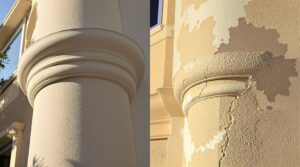
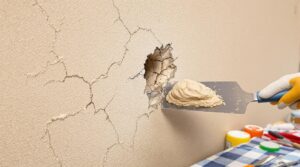
Your plaster assessment must identify telltale signs of deterioration, including cracks, bulges, and moisture damage that threaten the structural integrity of your walls and ceilings.
You’ll want to conduct a thorough plaster conditions survey, documenting each damaged area while prioritizing sections that need immediate attention.
Understanding traditional techniques and original materials is essential – whether you’re dealing with lime or gypsum plaster will determine your restoration approach.
Before repairing damaged areas, it’s vital to create a detailed restoration plan that preserves your building’s historical character.
If you’re unsure about any aspects, don’t hesitate to seek expert advice to guarantee your preservation efforts align with established conservation practices.
Traditional Materials and Their Modern Alternatives
After conducting a thorough plaster assessment, you’ll need to select appropriate materials that honor your building’s historical integrity.
Traditional materials like lime plaster remain superior for historic preservation, offering breathability and flexibility that modern alternatives often lack. You’ll find that incorporating horsehair into plaster repair strengthens the mixture and prevents cracking, a time-tested technique that outperforms synthetic options.
While gypsum plaster alternatives may seem convenient, they’re prone to air bubbles and durability issues.
Instead, consider user-friendly lime-based systems like Master of Plaster (MOP), which combine traditional craftsmanship with reliable performance.
When matching original materials, you’ll need to identify the specific plaster types used in your building’s era. This attention to authenticity guarantees your restoration work maintains both structural integrity and historical accuracy.
Mastering Essential Restoration Techniques
To master essential plaster restoration techniques, you’ll need to develop proficiency with both traditional methods and specialized tools. Understanding historical practices and traditional materials like lime plaster guarantees you’ll maintain the integrity of the plaster while preserving its aesthetic value.
For proper craftsmanship in plaster work, focus on these critical steps:
- Apply the base coat with a looser consistency for ideal coverage
- Incorporate fiberglass mesh during the first application to prevent cracks
- Use a Magic Trowel to achieve seamless embedding without surface ridges
Professional assistance may be necessary when dealing with historic restoration, as proper technique requires extensive knowledge of traditional materials.
The key to successful plaster restoration lies in combining time-tested methods, like horsehair reinforcement, with modern innovations that enhance durability while respecting historical authenticity.
Preserving Original Character Through Skilled Repairs
Building upon foundational restoration techniques, the art of preserving original character demands an intimate understanding of historic plaster craftsmanship.
When you’re restoring historic homes, you’ll need to master traditional methods that honor architectural integrity while ensuring longevity. Professional assessment helps identify cracking issues and guides proper restoration techniques.
You’ll find that successful plaster restoration relies on matching textures and finishes perfectly with original materials.
By incorporating elements like fiberglass mesh and traditional horsehair reinforcement, you’re not just repairing—you’re preserving history.
True craftsmanship shows in the details: addressing bulging sections, preventing discoloration, and creating seamless transitions between old and new work.
Each repair should enhance the home’s character while strengthening its structural integrity for generations to come.
Tools and Methods of Master Plasterers
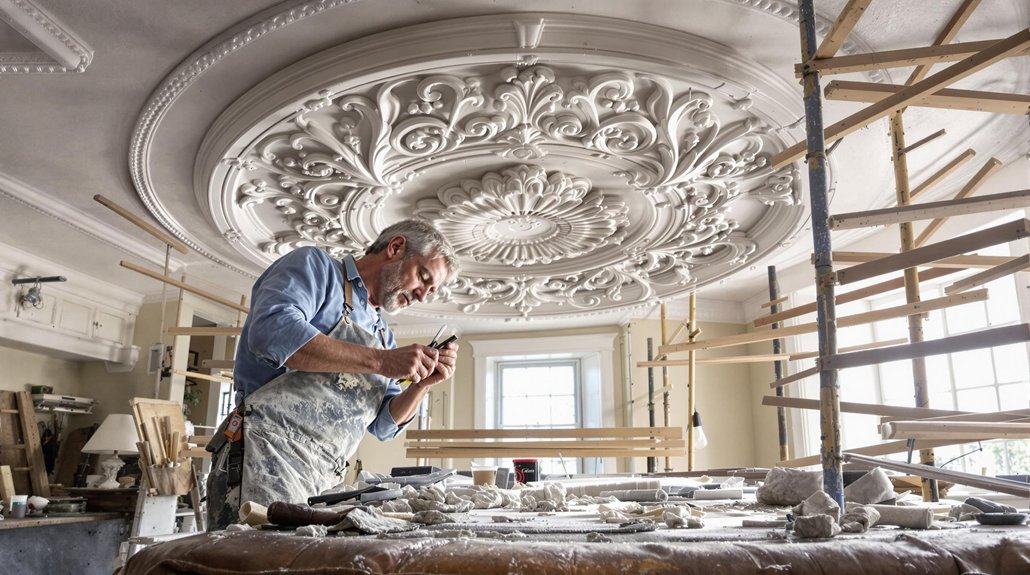
The master plasterer’s toolkit represents centuries of refined craftsmanship, featuring specialized implements that haven’t changed considerably since the trade’s earliest days.
Using traditional tools like trowels, hawks, and floats, you’ll find these artisans achieving seamless application through time-tested techniques.
When working with lime-based plaster, you’ll see attention to detail in the essential three-coat system:
- Scratch coat provides the foundation
- Brown coat establishes surface uniformity
- Finish coat delivers the final texture
You’ll notice master craftsmen embedding fiberglass mesh to guarantee structural integrity, while their methodical approach to ornamental details preserves historical authenticity.
This combination of traditional methods and modern reinforcement techniques demonstrates how architectural integrity isn’t just maintained—it’s enhanced through skilled craftsmanship.
Conclusion
You’ll find that historic plaster repair demands more than basic construction skills. It’s a calling that requires your deep respect for traditional methods, extensive knowledge of period-appropriate materials, and refined technical abilities. Whether you’re addressing hairline cracks or rebuilding entire sections, your craftsmanship must honor the original work while ensuring longevity. Master plasterers understand that each repair preserves not just walls, but irreplaceable architectural heritage.