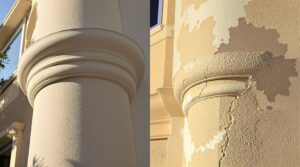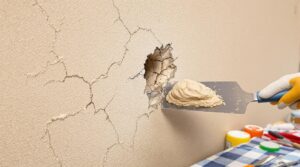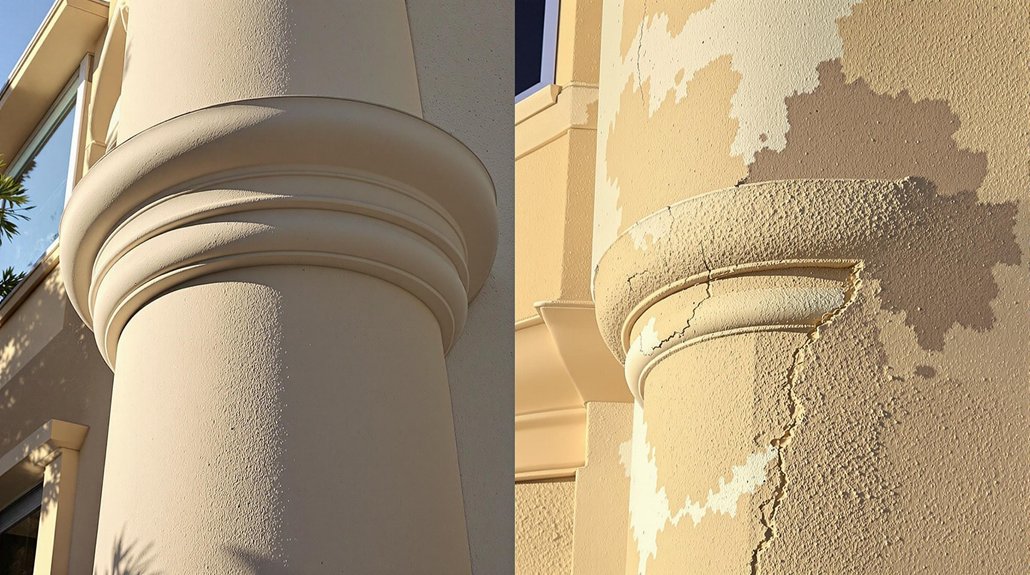
If you’re considering EIFS for your property, you’ll need to weigh significant factors before making this substantial investment. While EIFS offers remarkable energy efficiency and design flexibility that can transform your building’s appearance, it also carries potential risks that demand careful evaluation. Understanding the system’s components, installation requirements, and long-term implications will help you determine whether EIFS aligns with your property goals and budget constraints.
Key Takeaways
EIFS provides superior energy efficiency with up to 30% reduction in costs through continuous thermal barriers and advanced insulation design.
Installation requires specialized contractors and precise layering, increasing initial costs and complexity of repairs.
The system offers exceptional design flexibility with diverse textures and architectural details while maintaining structural integrity.
Regular maintenance and moisture management are crucial to prevent water damage and maintain long-term performance.
Long-term value through energy savings and aesthetic appeal often outweighs higher upfront costs of $30-50 per square foot.
Understanding EIFS Construction and Components
While many exterior cladding options exist for buildings, EIFS stands out as a sophisticated multi-layered system that combines insulation with aesthetic appeal.
You’ll find that EIFS incorporates an insulation board, typically made from expanded polystyrene, which maximizes your building’s energy efficiency by reducing heat transfer through walls.
The system’s strength comes from its reinforced base coat, featuring fiberglass mesh that prevents cracking and enhances durability.
The exterior finish coat, crafted from acrylic-based materials, provides both weather protection and customizable textures while resisting UV damage.
Since 1999, proper installation standards have improved considerably, addressing previous moisture management concerns.
When you’re considering EIFS for your property, it’s essential to understand that correct installation plays a vital role in achieving ideal performance and longevity.
Energy Efficiency Benefits of EIFS Systems
Although traditional insulation methods have served buildings well, EIFS systems deliver superior energy efficiency by creating a continuous thermal barrier around your structure.
You’ll experience up to 30% reduction in energy costs due to EIFS’s advanced multi-layer design that effectively minimizes heat transfer throughout your building.
With proper installation, your EIFS system will provide 50-60 years of reliable insulation performance, maximizing long-term energy savings while maintaining comfortable indoor temperatures year-round.
The system’s effectiveness is particularly notable in extreme climates, where you’ll see significant reductions in heating and cooling demands.
Additionally, EIFS’s lightweight composition reduces structural loads, contributing to overall building efficiency.
The combination of rigid insulation and water-resistant finish coats guarantees your structure maintains peak thermal performance throughout its lifetime.
Design Versatility and Aesthetic Options
Since modern architectural demands require both aesthetic appeal and functional performance, EIFS systems excel by offering unprecedented design versatility.
You’ll find that EIFS combines aesthetic flexibility with practical functionality, allowing you to create sophisticated architectural styles while maintaining energy efficiency.
Key design advantages of EIFS include:
- Customization options through varied colors and textures that can replicate traditional materials like brick or stone
- Integration of decorative elements such as cornices and moldings to enhance architectural detail
- Lightweight composition that enables easy molding around curves and unique shapes
- Seamless incorporation of insulation that maintains clean visual lines while improving thermal performance
You can leverage these features to transform your building’s exterior, achieving the desired aesthetic appeal without compromising structural integrity or energy performance.
Cost Analysis: Initial Investment Vs Long-Term Value
When evaluating EIFS for your construction project, understanding the cost-benefit relationship proves critical for informed decision-making. While you’ll face an initial investment of $30-50 per square foot, the long-term value often outweighs upfront costs through energy savings and durability.
| Cost Factor | Short-Term Impact | Long-Term Value |
|---|---|---|
| Installation | $30-50/sq ft | 50-60 year lifespan |
| Energy | Higher upfront | 30% annual savings |
| Maintenance | Regular inspections | Prevents water damage |
| Repairs | Specialized labor | Less frequent needs |
| Property Value | Aesthetic appeal | Higher resale value |
You’ll need to balance the higher installation costs against EIFS’s superior insulation properties, which can reduce your energy costs by up to 30% annually. Remember that proper maintenance is essential to prevent water damage and preserve your investment’s long-term benefits.
Weather Resistance and Durability Features
Through advanced engineering and multiple protective layers, EIFS delivers exceptional weather resistance and durability for your building’s exterior.
The insulation system combines water-resistive barriers with effective moisture management features to protect against water intrusion and potential mold issues. Your building’s thermal resistance is maximized through high-performance EPS or XPS insulation boards.
- Impact-resistant base coats shield your exterior from hail and flying debris
- Crack-resistant formulation maintains structural integrity in extreme weather
- Advanced drainage systems prevent moisture accumulation within the walls
- Multi-layer protection guarantees consistent performance in varying conditions
To maximize your EIFS’s 50-60 year potential lifespan, you’ll need to implement regular maintenance schedules and promptly address any repairs.
With proper care, your EIFS will continue providing superior weather resistance and durability for decades.
Common Installation Challenges and Solutions
Despite its proven durability, EIFS installation presents several technical challenges that you’ll need to address for peak performance. Proper installation requires precise layering of insulation, base coat, and finish materials, while maintaining effective moisture management throughout the process.
To prevent water intrusion, you’ll need to verify your drainage system is correctly integrated with the insulation layer. This means hiring certified installers who understand common EIFS requirements and can properly seal all joints and penetrations.
Don’t overlook the importance of regular post-installation inspections to catch potential issues early.
To overcome these challenges, work with experienced contractors who can demonstrate successful EIFS projects. They should follow manufacturer specifications closely and implement proper moisture barriers.
Consider scheduling installation during ideal weather conditions to verify proper curing and adhesion of materials.
Maintenance Requirements and Best Practices
To maximize the lifespan and performance of your EIFS installation, you’ll need to implement an extensive maintenance routine. Regular inspections and proper upkeep are essential to prevent moisture penetration and maintain the water-resistant barrier‘s integrity.
Here’s what you should include in your EIFS maintenance plan:
Schedule annual professional inspections to detect cracks, damages, or potential moisture issues.
Clean surfaces regularly with mild detergent and soft brushes to prevent mold growth.
Replace sealants every 3-5 years to maintain water resistance.
Address repairs immediately when you spot visible damage or deterioration.
Always work with certified contractors for maintenance and repairs to guarantee proper techniques and preserve your warranty coverage.
This proactive approach will help you avoid costly repairs and extend your EIFS system’s lifespan.
Moisture Management and Water Protection
Modern EIFS’s integrated moisture management features provide robust protection against water infiltration, making it a reliable choice for exterior cladding.
You’ll find multiple defense layers, including water-resistive barriers and specialized drainage systems, that effectively channel moisture away from your building’s structure.
Proper installation is essential for ideal water protection. When you’re installing EIFS, pay special attention to flashing details and drainage layers to prevent costly repairs down the line.
The system’s insulation board works double duty, managing both thermal performance and moisture control, particularly important in humid environments.
Regular inspections help you identify potential moisture issues before they escalate.
While early EIFS versions faced water-related challenges, today’s systems incorporate advanced moisture management technology that considerably reduces mold risks and extends your building’s durability.
Building Code Compliance and Regulations
Since building codes and regulations vary greatly by region, you’ll need to verify your EIFS installation meets all local requirements to avoid costly penalties and modifications.
To ascertain compliance, focus on proper moisture management systems and required fire resistance ratings during installation.
- Verify your EIFS contractor holds current certifications and understands local building codes specific to your area.
- Install required drainage planes and moisture management systems to prevent water intrusion.
- Confirm materials and installation methods meet mandated fire resistance ratings.
- Schedule regular inspections to maintain code compliance and detect potential issues early.
Remember that proper EIFS installation isn’t just about aesthetics – it’s about meeting strict regulatory requirements that protect your investment and guarantee safety.
Working with knowledgeable professionals will help you navigate these complex requirements effectively.
Comparing EIFS to Traditional Stucco Systems
When deciding between EIFS and traditional stucco, you’ll need to weigh several key performance factors that impact your building’s long-term efficiency and maintenance requirements. EIFS offers significant advantages in weight reduction and energy efficiency, while traditional stucco excels in repair simplicity and durability.
| Feature | EIFS | Traditional Stucco |
|---|---|---|
| Weight | 80% lighter | ~10 lbs per sq ft |
| Insulation | Built-in system | Separate application |
| Energy Efficiency | Up to 30% savings | Lower efficiency |
| Repairs | Complex, costly | Simple, affordable |
| Installation | Multi-layer process | Single-layer application |
The installation process for insulation finishing systems requires precise layering, but you’ll benefit from enhanced design flexibility and superior thermal performance. While repairs might be more challenging with EIFS, its lightweight construction and integrated insulation can offset long-term maintenance considerations.
Conclusion
You’ll need to carefully weigh EIFS benefits against potential challenges before making your decision. While it offers superior energy efficiency and design flexibility, proper installation and maintenance are critical to prevent moisture issues. Consider your climate, budget, and long-term maintenance capabilities. If you proceed with EIFS, guarantee you select certified installers and implement a robust maintenance protocol to maximize your system’s performance and longevity.