You’ll face an essential decision when your stucco shows signs of wear: tackle it yourself or hire a professional. While DIY repairs can save money on minor issues like hairline cracks, choosing the wrong approach could lead to costly complications. Understanding the scope of damage, required techniques, and your skill level will determine the best path forward. Let’s explore how to make this significant choice for your stucco maintenance needs.
Key Takeaways
DIY repairs are suitable for hairline cracks under ⅛ inch wide using repair kits costing $10-$15.
Call professionals when damage shows brown streaks, bulging areas, or signs of mold indicating serious moisture problems.
DIY requires proper tools like trowels and hawks, while professionals have access to premium materials and specialized equipment.
Professional services cost $60-$120 per square foot but include expertise, warranties, and identification of underlying issues.
Consider safety risks, skill level, and time investment when choosing between DIY repairs and professional contractors.
Understanding Common Stucco Damage Signs
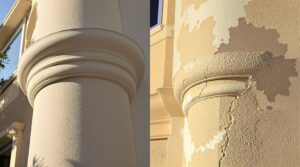
How can you spot the warning signs of stucco damage before they become major issues? Keep an eye out for brown or rust-colored streaks near windows and doors, as these indicate moisture damage that needs immediate attention.
Watch for larger cracks exceeding ⅛ inch, which signal potential structural problems requiring professional inspection.
You’ll want to examine your walls for bulging or soft areas, as these reveal severe underlying damage that demands expert evaluation.
Don’t ignore signs of mold or mildew, especially in nearby carpeting, as they often point to hidden water infiltration.
Pay close attention to cracks or bubbles forming at wall bases – these typically suggest drainage issues that can escalate quickly if left unchecked.
Early detection of these warning signs helps prevent costly repairs and protects your home’s structural integrity.
Assessing Your Repair Project Scope
Once you’ve identified potential stucco damage, determining your repair project’s scope becomes the next critical step.
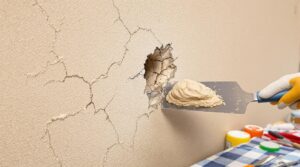
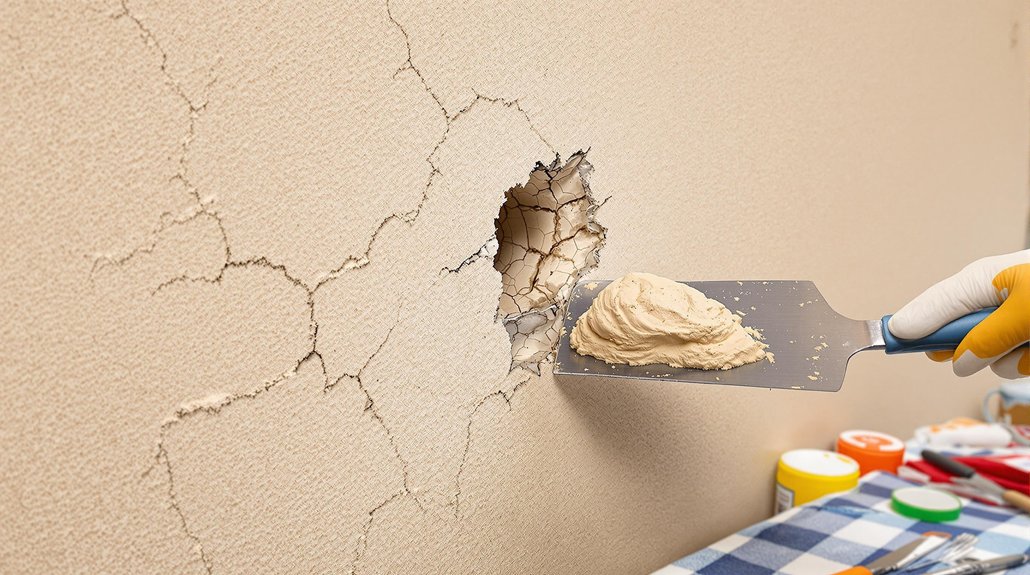
Start by measuring crack widths – if they’re hairline fractures under ⅛ inch, you might handle them with a DIY repair kit. However, larger cracks signal the need for professional inspection.
When evaluating your repair project scope, pay close attention to damage near windows and doors, as these often indicate moisture problems requiring expert evaluation.
If you spot bulging, soft spots, or mold growth, you’re likely dealing with structural issues beyond DIY capabilities.
Your skill level and available tools also factor into the DIY vs. hiring decision.
Remember that underlying problems, such as poor drainage, often need professional diagnosis to prevent recurring damage.
Essential Tools and Materials for DIY Repairs
Before tackling any stucco repair project, you’ll need to gather the right tools and materials to guarantee professional-quality results. For DIY stucco repair success, equip yourself with essential tools including trowels, mixing paddles, and stucco hawks for proper application. Don’t forget your safety gear – gloves and goggles are non-negotiable.
| Essential Items | Purpose |
|---|---|
| Stucco Repair Kit | Patching hairline cracks |
| Mixing Equipment | Combining materials to proper ratio |
| Application Tools | Spreading and texturing stucco |
| Finishing Items | Surface smoothing and paint matching |
For smaller repairs, a stucco repair kit offers everything you’ll need for addressing minor cracks. Keep a mixing bucket handy and always follow manufacturer’s specifications for material ratios. For the final touches, you’ll want a float for smooth finishing and painting supplies to match existing surfaces.
When DIY Makes Financial Sense
While professional stucco repairs can strain your budget, taking the DIY route makes financial sense for minor damage like hairline cracks and small surface imperfections.
You’ll typically spend just $0.05-$0.10 per square foot on materials, compared to $40-$50 per hour for professional labor costs. The repair process becomes cost-effective when you’re dealing with straightforward fixes that don’t require specialized expertise.
- Hairline cracks under ⅛ inch can be effectively managed with a DIY repair kit
- Basic repairs can be completed over a weekend with standard tools
- Surface-level repairs don’t require professional assessment when there’s no structural damage
Before starting your DIY project, evaluate the damage scope carefully.
If you’ve got basic handyman skills and the damage is minimal, you’ll save considerably by handling the repairs yourself.
Professional Expertise Benefits
Although DIY repairs can save money on minor issues, professional stucco contractors bring invaluable expertise that can’t be replicated with basic tools and weekend workshops.
When you hire a professional stucco contractor, you’ll benefit from their ability to identify underlying problems that might go unnoticed by untrained eyes, preventing costly future repairs.
The benefits of professional stucco repair extend beyond expertise alone.
You’ll get access to premium materials and advanced application techniques that guarantee lasting durability.
Professional contractors work efficiently, completing projects in considerably less time than DIY attempts, while adhering to strict safety protocols.
Additionally, you’re protected by warranties and insurance coverage, safeguarding your investment against potential complications.
Safety Considerations and Risk Factors
The safety implications of stucco repair work demand serious consideration from both professionals and DIY enthusiasts.
When you’re weighing safety considerations for your repair project, remember that professional contractors follow strict protocols and use specialized equipment to protect both workers and property. You’ll face considerable risks if you attempt complex repairs without proper training and safety gear.
Working at height requires proper scaffolding setup and fall protection systems that professionals are trained to use.
Heavy materials handling demands specific lifting techniques and protective equipment to prevent injuries.
Exposure to materials and dust necessitates appropriate respiratory protection and safety gear.
If you’re considering a DIY project, understand that professionals bring extensive safety knowledge and specialized equipment that greatly reduces accident risks compared to amateur repairs.
Your safety should be the primary factor in deciding whether to tackle the job yourself.
Cost Comparison: DIY Vs Professional Services
Making an informed decision between DIY stucco repair and professional services requires careful consideration of both upfront costs and long-term financial implications.
When you’re weighing DIY vs hiring a professional, you’ll find significant initial savings in labor costs. While professionals charge $60-$120 per square foot, you’ll only need to account for materials and your time at an equivalent rate of $40-$50 per hour.
Traditional stucco materials cost $10-$15 per bag, while synthetic options run $40-$50 per bucket. However, don’t overlook additional expenses like vapor barriers, metal lath, and matching paint costs ranging from $300-$500.
Consider that professionals’ expertise typically results in faster completion and fewer mistakes. If your DIY repair isn’t done correctly, you might face higher costs later when hiring professionals to fix both the original issue and any new problems.
Critical Warning Signs to Call a Pro
Recognizing vital warning signs in your stucco can mean the difference between a minor repair and extensive structural damage. When you notice discoloration, particularly brown streaks near windows, or cracks wider than ⅛ inch, it’s time to contact stucco repair services immediately.
Professional assessment becomes essential if you spot bulging areas or crumbling sections, as these indicate serious underlying issues.
Water damage signs, including mold growth or damp patches, require expert evaluation to prevent health hazards and structural compromise.
Cracks or bubbles forming at wall bases suggest drainage problems that need thorough professional solutions.
Soft spots in your stucco surface, accompanied by discoloration, indicate moisture infiltration requiring immediate attention.
Don’t wait until these vital signs worsen – prompt professional intervention can save you from costly repairs and protect your property’s integrity.
Tips for Successful DIY Stucco Repairs
While tackling stucco repairs may seem intimidating, you can successfully handle minor fixes with proper preparation and technique. Before starting your DIY approach, assess the damage carefully – you’ll want to tackle only hairline cracks and small areas that measure less than ⅛ inch wide.
For a successful stucco repair, you’ll need proper tools like trowels, mixing paddles, and hawks to guarantee smooth application. Choose a quality repair kit that matches your needs, typically costing $10-$15 for traditional stucco applications.
When mixing materials, follow manufacturer instructions precisely to prevent adhesion problems. Time your repairs during mild, dry weather conditions to guarantee proper curing.
Choosing the Right Professional Contractor
When your stucco repair needs exceed DIY capabilities, selecting a qualified professional contractor becomes essential for your home’s integrity. You’ll need to verify the contractor’s licensing and guarantee they carry proper insurance and bonding before proceeding.
Look for professionals who utilize specialized equipment and have extensive experience with your specific stucco type.
Research their track record through client reviews, industry certifications, and completed project portfolios.
Request detailed written estimates that outline materials, labor costs, and project timeline commitments.
Confirm warranty coverage terms and after-service support policies.
Don’t settle for contractors who can’t demonstrate expertise in stucco-specific repairs. The right professional will readily provide documentation of their qualifications, offer transparent pricing, and explain their repair methodology.
This due diligence guarantees your investment is protected and repairs meet industry standards.
Conclusion
Your success with stucco repair hinges on accurate damage assessment and honest skill evaluation. For hairline cracks and minor surface issues, you’ll save money with DIY solutions, provided you’ve got the right tools and materials. When you’re facing structural concerns, moisture damage, or extensive cracking, it’s essential to invest in professional expertise. Remember, proper repair methods now prevent costly remediation later.